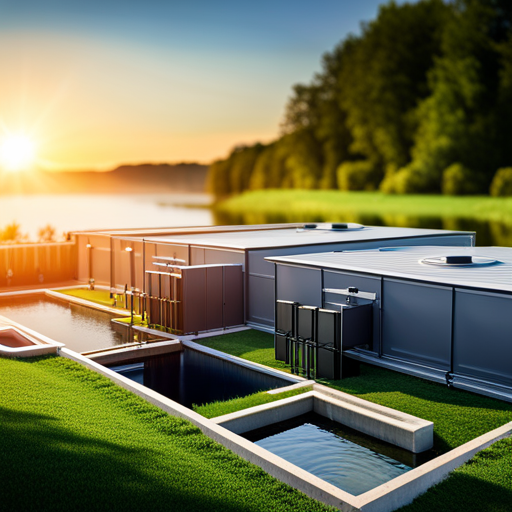
Advanced wastewater treatment systems have become a topic of increasing interest and importance in recent years. As population growth and urbanization continue to strain traditional septic systems, exploring alternative solutions has become crucial to ensure the sustainable management of wastewater.
This article aims to delve into the realm of advanced septic solutions, providing an objective and analytical overview of innovative technologies and processes that can enhance water quality, disinfection, and treatment efficiency.
In the field of wastewater treatment, innovative technologies have emerged as potential alternatives to traditional septic systems. These advanced biological treatment processes, such as membrane bioreactors and sequencing batch reactors, offer improved nutrient removal and treatment capabilities. By utilizing specialized microorganisms and biofilm systems, these processes can effectively break down organic matter and remove harmful contaminants from wastewater, resulting in cleaner water that can be safely discharged or reused.
Furthermore, ultraviolet disinfection has gained recognition as an effective method for enhancing water quality in advanced wastewater treatment systems. By utilizing ultraviolet light, this process can efficiently kill bacteria, viruses, and other microorganisms present in wastewater, significantly reducing the risk of waterborne diseases. Additionally, chemical oxidation methods, such as advanced oxidation processes and ozonation, can be employed to further enhance the treatment efficiency of wastewater. These methods involve the use of powerful oxidizing agents to break down organic compounds and remove persistent contaminants, ensuring the production of high-quality effluent.
As the demand for sustainable septic solutions continues to rise, exploring alternative wastewater treatment systems becomes imperative. This article aims to provide an objective and technical examination of advanced septic solutions, presenting innovative technologies and processes that offer efficient treatment and enhanced water quality. By addressing the challenges of traditional septic systems and offering viable solutions, this article seeks to contribute to the collective efforts towards sustainable wastewater management and the preservation of our water resources.
Key Takeaways
– Advanced wastewater treatment systems are crucial for sustainable management, especially in the face of population growth and urbanization that strain traditional septic systems.
– Advanced biological treatment processes, such as membrane bioreactors and sequencing batch reactors, enhance water quality and treatment efficiency by improving nutrient removal and treatment capabilities.
– Advanced membrane filtration and electrochemical treatment processes show promise in wastewater treatment, offering advantages such as removing particles, bacteria, and contaminants, as well as the ability to treat a wide range of wastewater types with low energy consumption.
– Incorporating ultraviolet disinfection into septic solutions provides a reliable, efficient, and chemical-free method to eliminate harmful microorganisms and pathogens, ensuring the provision of safe and clean water without altering taste, color, or odor.
Innovative Technologies in Wastewater Treatment
Innovative technologies in wastewater treatment have emerged as a promising solution to address the ever-increasing challenges in managing and treating wastewater effectively.
One such technology is advanced membrane filtration, which has gained significant attention due to its ability to remove particles, bacteria, and other contaminants from wastewater. This process involves the use of a semi-permeable membrane that allows water molecules to pass through while preventing the passage of larger particles and impurities. Advanced membrane filtration systems offer high efficiency and can be customized to meet specific treatment requirements, making them a versatile solution for wastewater treatment.
Another innovative technology in wastewater treatment is electrochemical treatment processes. These processes involve the use of electrical energy to facilitate the removal of pollutants from wastewater. Electrochemical treatment can effectively remove contaminants such as heavy metals, organic compounds, and pathogens through various mechanisms, including electrocoagulation, electrooxidation, and electroflocculation. This technology offers advantages such as low energy consumption, minimal chemical requirements, and the ability to treat a wide range of wastewater types.
Electrochemical treatment processes have shown great potential in improving the overall efficiency and effectiveness of wastewater treatment, making them a promising option for advanced wastewater treatment systems.
Overall, advanced membrane filtration and electrochemical treatment processes are two innovative technologies that hold great promise in addressing the challenges of wastewater treatment. These technologies offer efficient and effective solutions for removing contaminants from wastewater and can be tailored to meet specific treatment requirements.
By incorporating these technologies into wastewater treatment systems, we can achieve improved water quality and contribute to a more sustainable and environmentally friendly approach to wastewater management.
Advanced Biological Treatment Processes
Biological treatment processes play a pivotal role in enhancing the efficiency and effectiveness of wastewater treatment. One key aspect of biological treatment is the removal of nutrients from wastewater. Biological nutrient removal (BNR) is a process that involves the use of microorganisms to remove excess nutrients such as nitrogen and phosphorus from wastewater. This is crucial because excessive levels of nutrients in water bodies can lead to eutrophication, which can harm aquatic ecosystems.
BNR processes typically involve two stages: the first stage is the removal of carbonaceous organic matter, while the second stage focuses on the removal of nitrogen and phosphorus. Various biological treatment technologies, such as activated sludge processes and sequencing batch reactors, have been developed to achieve efficient nutrient removal. These processes can be further enhanced by incorporating innovative techniques such as membrane bioreactors (MBRs).
MBRs combine biological treatment with filtration using membranes, which results in superior effluent quality and increased treatment capacity. The use of MBRs in biological treatment processes allows for the removal of a wide range of contaminants, including suspended solids, pathogens, and trace organic compounds, making it a highly effective technology for advanced wastewater treatment.
The integration of advanced biological treatment processes, such as biological nutrient removal and membrane bioreactors, offers promising solutions for wastewater treatment. These technologies not only improve the quality of treated effluent but also provide a more sustainable and efficient approach to wastewater management. For instance, biological nutrient removal enables the removal of excess nutrients, addressing the issue of eutrophication and its adverse effects on aquatic ecosystems.
Additionally, the incorporation of membrane bioreactors in biological treatment processes enhances the removal of contaminants, resulting in higher-quality effluent that meets stringent regulatory standards. Moreover, MBRs offer several advantages over conventional treatment systems, such as smaller footprint, flexibility in design, and the ability to handle high fluctuating loads. These features make MBRs suitable for various applications, including decentralized wastewater treatment systems.
By adopting advanced biological treatment processes like BNR and MBRs, communities can achieve efficient and sustainable wastewater treatment, contributing to the preservation and protection of water resources.
Ultraviolet Disinfection for Enhanced Water Quality
Ultraviolet disinfection has emerged as a highly effective method for improving water quality by eliminating harmful microorganisms and pathogens. UV disinfection systems use ultraviolet light to destroy the genetic material of microorganisms, rendering them unable to reproduce and cause harm.
The benefits of UV treatment are numerous. Firstly, it provides a chemical-free solution for water disinfection, eliminating the need for potentially harmful chemicals such as chlorine. This is particularly important in areas where the use of chemicals may be restricted due to environmental concerns.
Additionally, UV disinfection does not alter the taste, color, or odor of water, ensuring that the water remains safe and palatable for consumption. Moreover, UV disinfection systems offer a high degree of reliability and efficiency. They are capable of treating large volumes of water in a relatively short period, making them suitable for both residential and industrial applications.
Furthermore, UV treatment is effective against a wide range of microorganisms, including bacteria, viruses, and protozoa. By targeting the genetic material of these organisms, UV disinfection ensures a thorough and comprehensive elimination of pathogens. This makes it an ideal solution for ensuring water safety in settings such as hospitals, schools, and public water supplies.
UV disinfection systems offer numerous benefits for enhancing water quality. Their chemical-free nature, ability to treat large volumes of water efficiently, and effectiveness against a wide range of microorganisms make them a valuable tool in advanced wastewater treatment systems. Incorporating UV treatment into septic solutions can provide a reliable and effective means of eliminating harmful pathogens, ensuring the provision of safe and clean water for both residential and industrial purposes.
Chemical Oxidation Methods in Wastewater Treatment
Chemical oxidation methods are highly effective in removing contaminants from wastewater, providing a powerful solution for enhancing water quality.
One such method is electrochemical oxidation, which involves the use of an electric current to generate oxidizing agents that break down organic and inorganic pollutants in the wastewater. This process is particularly effective in removing persistent organic pollutants and heavy metals.
The Advantages of Mound Septic Systems
Electrochemical oxidation has several advantages over traditional treatment methods, including its ability to operate at ambient temperatures and the potential for on-site treatment.
Additionally, advanced oxidation processes (AOPs) are also widely used in wastewater treatment. AOPs involve the generation of highly reactive hydroxyl radicals, which can rapidly oxidize and degrade organic compounds in the wastewater. These processes can be used to remove a wide range of contaminants, including pharmaceuticals, pesticides, and endocrine disruptors.
AOPs are efficient and versatile, and can be tailored to specific treatment needs by adjusting the operating conditions and the choice of oxidant.
Overall, chemical oxidation methods, such as electrochemical oxidation and advanced oxidation processes, offer a promising solution for wastewater treatment. These methods are highly effective in removing contaminants and improving water quality, making them suitable for a wide range of applications.
By incorporating these advanced technologies into wastewater treatment systems, we can ensure the efficient removal of pollutants and protect both human health and the environment.
The Future of Sustainable Septic Solutions
Innovative approaches are being developed to revolutionize the management of septic systems, ensuring long-term sustainability and environmental protection.
One such approach is the implementation of green infrastructure for decentralized wastewater management. Green infrastructure refers to the use of natural systems and processes to manage stormwater and wastewater. This approach involves the use of techniques such as constructed wetlands, bioswales, and rain gardens to treat and purify wastewater. These systems mimic the natural processes of filtration and absorption, allowing for the removal of contaminants and the replenishment of groundwater.
Another important aspect of sustainable septic solutions is the recycling and reuse of treated wastewater for sustainable water resources. Instead of discharging treated wastewater into the environment, it can be treated to a high standard and used for various purposes such as irrigation, industrial processes, and even drinking water supply. This not only reduces the strain on freshwater resources but also prevents the pollution of rivers and lakes.
Advanced treatment technologies such as membrane filtration, ultraviolet disinfection, and reverse osmosis can be employed to ensure the quality of the recycled water. By implementing these innovative approaches, we can create a more sustainable and resilient wastewater management system that not only protects the environment but also ensures the availability of clean water resources for future generations.
Frequently Asked Questions
How much does an advanced wastewater treatment system cost?
The cost of an advanced wastewater treatment system depends on various factors, including the specific technology used, installation requirements, and ongoing maintenance needs. Understanding these cost factors is crucial for making informed decisions regarding wastewater treatment solutions.
Are there any government regulations or permits required for installing alternative septic solutions?
Government regulations and permits are required for installing alternative septic solutions. The permitting process ensures compliance with environmental standards and protects public health by monitoring the installation and operation of these systems.
Can advanced biological treatment processes be used for large-scale wastewater treatment plants?
Advanced biological treatment processes can indeed be used for large-scale wastewater treatment plants. These processes offer several advantages, including cost-effectiveness when compared to other treatment methods.
Are there any limitations or challenges associated with using ultraviolet disinfection for water quality enhancement?
Challenges and limitations associated with ultraviolet disinfection for water quality enhancement include the need for proper maintenance, high energy requirements, limited effectiveness against certain pathogens, and potential formation of disinfection byproducts. Solutions can include regular system checks and optimization of UV dosage.
What are some examples of chemical oxidation methods used in wastewater treatment?
Chemical oxidation methods commonly used in wastewater treatment include chlorine, ozone, and hydrogen peroxide. These methods are effective in removing organic pollutants and improving water quality. However, their implementation may incur additional costs in advanced systems.